Зміст
When comparing lemon balm tincture vs herbal blend, the main question is whether you want one clearly identified botanical or a formula combining several plants. Both options are available as ready-to-use liquid extracts, but they differ in ingredients, complexity, and how easily you can review individual components.
Secrets Of The Tribe offers a standalone Lemon Balm Tincture alongside Calm Secret, a seven-botanical blend that already contains lemon balm. A longer ingredient list does not establish better results, and choosing one botanical does not guarantee suitability for everyone.
This comparison examines the actual formulas, explains what each format offers, and helps you decide whether purchasing both makes sense for your routine.
What Is the Difference Between a Single-Herb Tincture and a Blend?
A single-herb tincture contains one botanical species, while a multi-herb tincture combines several botanical species in one preparation. Both may contain additional ingredients used for extraction, such as water or vegetable glycerin.
A standalone lemon balm extract focuses on Melissa officinalis. Calm Secret combines lemon balm with six other botanical ingredients.
Single-Herb vs Multi-Herb Decision Matrix
| Comparison | Lemon Balm Tincture | Calm Secret Blend |
|---|---|---|
| Botanical ingredients | 1 species | 7 species |
| Main botanical | Melissa officinalis | Seven-herb combination including Melissa officinalis |
| Formula complexity | Lower | Higher |
| Ingredient review | One botanical to evaluate | Seven botanicals to evaluate |
| Individual tolerance tracking | Fewer botanical variables | More possible contributors |
| Typical flavor direction | Lemony, herbal | Mixed botanical character |
| Product format | Liquid drops | Liquid drops |
| Alcohol-free | Yes, according to product listing | Yes, according to product listing |
| Automatically better? | No | No |
Botanical count is not a measurement of concentration or quality. Different extracts may contain different quantities of plant material and different proportions of botanical constituents.
Which Herbs Are Actually in Calm Secret?
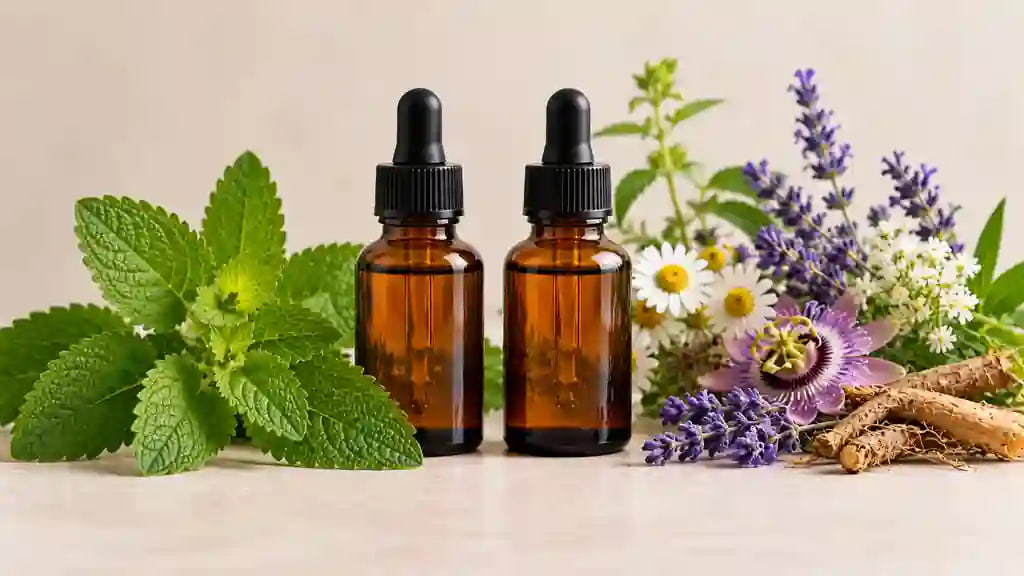
Calm Secret contains seven listed botanicals: lemon balm, passionflower, lavender, ashwagandha, valerian, brahmi, and chamomile. The published composition identifies the scientific names and plant parts used.
| Botanical | Scientific Name | Listed Plant Part |
|---|---|---|
| Lemon balm | Melissa officinalis | Dried leaf |
| Passionflower | Passiflora incarnata | Dried leaf and herb |
| Lavender | Lavandula x intermedia | Dried flowers |
| Ashwagandha | Withania somnifera | Dried root |
| Valerian | Valeriana officinalis | Dried root |
| Brahmi | Bacopa monnieri | Dried herb |
| Chamomile | Matricaria recutita | Dried flowers |
This composition provides a concrete comparison with a lemon balm-only preparation. The blend contains leaves, roots, flowers, and other above-ground plant material.
Why the Plant Parts Matter
Different plant parts may have different constituent profiles. A root extract is not automatically equivalent to an extract made from leaves or flowers of the same plant.
The lavender ingredient is specifically listed as Lavandula x intermedia, commonly called lavandin, rather than the broader category of lavender.
What the Ingredient List Does Not Establish
A formula containing seven species does not mean that each herb contributes the same amount as a full serving of its standalone extract.
To compare quantities, examine the Supplement Facts panel and any supporting manufacturer documentation. A proprietary blend may disclose a combined weight without listing the individual weight of each botanical.
Does a Multi-Herb Blend Offer an Advantage Over One Herb?
Not necessarily. More botanical ingredients do not automatically make a formula better, stronger, or more appropriate. The number of plants describes formula complexity, not comparative performance.
Research involving individual herbs cannot automatically establish the characteristics of a finished seven-herb formula. Likewise, conclusions about one commercial blend cannot be transferred to another product with different ingredients or concentrations.
The Simplicity of One Botanical
A standalone extract offers a clear botanical focus. Someone specifically interested in Melissa officinalis can select that plant without introducing six additional botanicals.
However, a single-herb product still requires careful attention to the extraction ingredients, labeled serving, and individual suitability.
The Convenience of a Prepared Blend
A multi-herb product combines several botanical ingredients into one bottle. This may be convenient for consumers who have reviewed the full formula and prefer not to purchase separate extracts.
Convenience does not establish better results. A blend is simply a different formulation choice.
Is It Easier to Track Individual Tolerance With One Herb?
A single-herb preparation generally makes ingredient review simpler because fewer botanical variables are involved. If an unexpected reaction occurs, there is only one botanical species to consider alongside the extraction ingredients.
With a seven-herb formula, several different plants may be relevant when reviewing individual sensitivity.
This distinction does not mean that a single-herb supplement is automatically safer. Any botanical or other ingredient can be unsuitable for a particular person.
It also does not mean that a reaction can be reliably attributed to a specific ingredient without professional assessment.
If you notice an adverse reaction after using a new supplement, stop using it and seek appropriate medical advice rather than repeatedly testing possible causes yourself.
Do You Need Both Products If the Blend Already Contains Lemon Balm?
No. There is no general requirement to use both a standalone lemon balm tincture and a multi-herb blend containing lemon balm. Taking both introduces overlapping botanical ingredients.
Calm Secret already lists Melissa officinalis among its seven botanicals. Adding a separate lemon balm product would introduce another preparation of the same plant.
However, the amount of lemon balm in the blend should not be assumed equivalent to a complete serving of the standalone extract.
For someone who wants only Melissa officinalis, a single-botanical lemon balm tincture provides a more focused option without the additional herbs found in the blend.
Someone who specifically prefers the combination may instead consider the prepared multi-herb formula after reviewing every ingredient and its suitability.
The editorial position at Secrets Of The Tribe is that botanical transparency and a clear reason for choosing each ingredient matter more than the number of herbs in a routine.
Are Both Products Alcohol-Free Liquid Extracts?
Yes. The current product listings describe both Lemon Balm Tincture and Calm Secret as alcohol-free liquid preparations with suggested use alongside water.
This means both offer a convenient liquid format without requiring loose herbs, tea bags, or preparation of an infusion.
Alcohol-Free Does Not Mean Ingredient-Free
Alcohol-free extracts may use vegetable glycerin, water, or other suitable extraction systems.
These ingredients can influence flavor, texture, and the final botanical composition. Always check the complete label rather than relying only on the alcohol-free description.
Flavor and Mixing Differences
Lemon balm has a characteristic citrus-herbal aroma. A blend containing seven botanicals can have a more complex flavor, although the exact taste cannot be predicted from the ingredient list alone.
When product directions permit mixing with water, follow the suggested serving. Do not increase the amount simply because the liquid is diluted into a larger drink.
What Safety Considerations Matter With a Seven-Herb Blend?
A blend requires reviewing the suitability of every botanical it contains. Several ingredients in Calm Secret have specific considerations documented by independent health authorities.
Ashwagandha
Ashwagandha can interact with certain medications. Safety guidance advises avoiding it during pregnancy and breastfeeding and identifies additional concerns for people with thyroid or autoimmune conditions.
Chamomile
Chamomile belongs to the Asteraceae family. People allergic to related plants such as ragweed or chrysanthemums may be more likely to experience allergic reactions.
Valerian
Valerian has specific cautions involving alcohol and sedative medications. These considerations matter when reviewing a formula that includes valerian root.
The presence of these ingredients does not mean that every consumer will experience an adverse reaction. It means the complete formula deserves review.
People taking medications, those who are pregnant or nursing, and individuals with relevant health concerns should consult a qualified healthcare professional before using either supplement.
How Should You Compare Supplement Labels Before Buying?
Start with the Supplement Facts panel. Check the serving size, botanical names, plant parts, and declared quantities.
For blends, determine whether botanical amounts are listed individually or grouped under a proprietary blend.
Next, check the other ingredients, storage requirements, caution statements, and suggested use.
Botanical Identity
Scientific names help distinguish different plants and closely related species. They are particularly useful in formulas containing several botanicals with similar common names.
Concentration and Serving
Do not compare two products using drop count alone. Different formulas can contain different quantities and proportions of botanical constituents.
Quality Documentation
Look for meaningful batch-testing information and clearly identified ingredients. Manufacturer testing claims can be useful starting points, but the actual test report provides more detail.
An FDA-registered manufacturing facility does not mean the individual dietary supplement has received FDA approval.
Checklist: Choosing Between a Single-Herb Tincture and a Blend
Choosing a botanical extract becomes easier when you compare the actual ingredients rather than the marketing description. Use this checklist to identify the format that fits your preferences and existing supplement routine.
1. Identify Your Preference
Decide whether you want one botanical or a prepared combination. Do not assume that a longer ingredient list is automatically preferable.
2. Count the Botanical Ingredients
Read every plant name on the label. Check the scientific names when available.
3. Look for Ingredient Overlap
Compare the new product with supplements you already use. The same botanical may appear in several formulas.
4. Review the Plant Parts
Check whether the extract contains leaves, roots, flowers, or other botanical material.
5. Examine the Extraction Base
Identify the liquid ingredients and any alcohol-free claims. Review the full label for clarification.
6. Follow the Serving Instructions
Use the amount recommended for the specific product. Do not copy measurements from another formula.
7. Consider Individual Suitability
Review allergies, medications, and relevant personal circumstances before choosing a botanical supplement.
FAQ
1. What is the main difference between lemon balm tincture and an herbal blend?
A lemon balm-only tincture contains one botanical species. A multi-herb blend combines several botanical species into one formula.
2. How many herbs are in Calm Secret?
The published Calm Secret formula contains seven botanical ingredients: lemon balm, passionflower, lavender, ashwagandha, valerian, brahmi, and chamomile.
3. Does Calm Secret already contain lemon balm?
Yes. Its listed composition includes dried Melissa officinalis leaf.
4. Is a multi-herb blend better than a single-herb extract?
Not automatically. The number of botanical ingredients does not establish product quality, suitability, or comparative effectiveness.
5. Is a single-herb tincture safer?
Not necessarily. Fewer botanical ingredients can simplify label review, but a single herb may still have safety considerations.
6. Should you combine lemon balm tincture with a blend containing lemon balm?
There is no general need to combine them. Review overlapping ingredients and seek professional guidance before using multiple supplements together.
7. Are both products available alcohol-free?
Yes. Both product listings describe alcohol-free liquid preparations. Check the current bottle label before use.
8. Does one dropper of a blend equal one dropper of lemon balm tincture?
No. Different formulations may contain different botanical quantities and concentrations. Equal liquid volumes do not establish equivalent composition.
Glossary
Single-Herb Extract: A preparation containing one botanical species, potentially alongside extraction ingredients.
Herbal Blend: A product combining two or more botanical species.
Melissa officinalis: The scientific name for lemon balm, an aromatic herb from the mint family.
Botanical Ingredient: Plant material or a plant-derived preparation used in a supplement.
Plant Part: The leaf, root, flower, or other portion of a plant used in a preparation.
Glycerite: A liquid botanical extract made using glycerin, commonly combined with water.
Supplement Facts: A standardized U.S. supplement label panel containing serving and dietary ingredient information.
Proprietary Blend: A grouped ingredient mixture that may disclose a total weight without specifying the individual amount of every component.
Ingredient Overlap: The presence of the same botanical ingredient in more than one supplement.
Conclusion
A standalone lemon balm tincture offers a simpler botanical formula, while Calm Secret combines seven plants, including lemon balm, in one liquid extract. Neither option is automatically better, and taking both is not inherently necessary; choose based on the complete ingredient list, product instructions, and individual suitability.
Sources Used
Lemon Balm Tincture product format, alcohol-free labeling, and suggested use - secrets.shop/products/lemon-balm-tincture
Calm Secret formula composition, seven botanical ingredients, and suggested use - secrets.shop/products/calm-secret-extract-tincture
Dietary supplement ingredient declarations and proprietary blends - fda.gov/food/information-consumers-using-dietary-supplements/questions-and-answers-dietary-supplements
Dietary supplement labeling and plant-part declarations - fda.gov/food/dietary-supplements-guidance-documents-regulatory-information/dietary-supplement-labeling-guide-chapter-iv-nutrition-labeling
Consumer guidance on combining supplements and FDA oversight - fda.gov/consumers/consumer-updates/fda-101-dietary-supplements
General guidance on herbal supplement safety - nccih.nih.gov/health/using-dietary-supplements-wisely
Ashwagandha safety, interactions, and pregnancy considerations - nccih.nih.gov/health/ashwagandha
Chamomile allergy and interaction considerations - nccih.nih.gov/health/chamomile
Valerian safety and interaction considerations - nccih.nih.gov/health/valerian